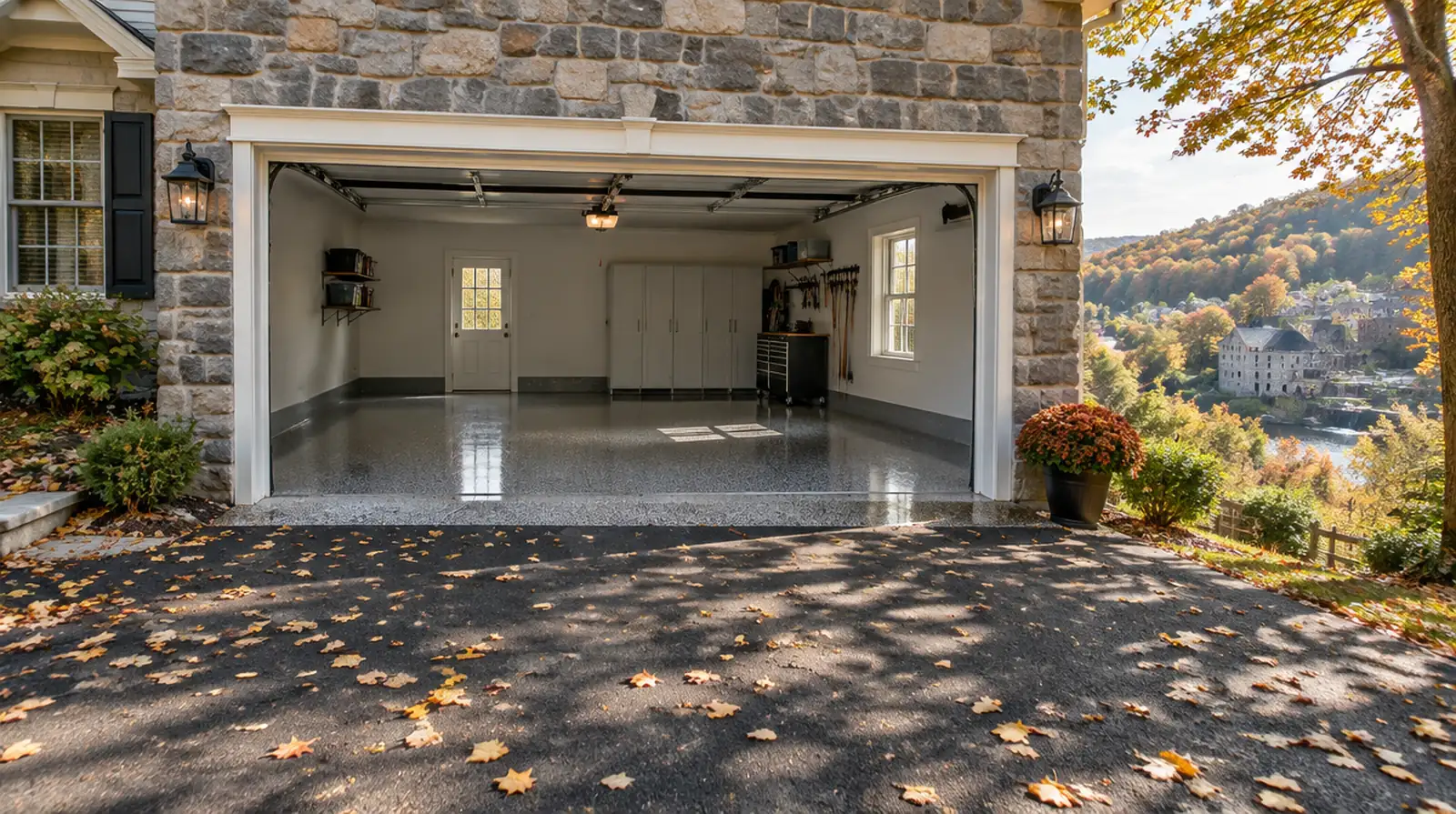
Polyaspartic in brief
Polyaspartic belongs to the polyurea family of coatings. It cures in a fraction of the time epoxy needs, stays flexible, resists abrasion and chemicals and, because it is aliphatic, holds its color in sunlight. That last point matters in front-load garages where afternoon sun pours across the floor every day. Many epoxy floors turn amber near the door within a few years. A polyaspartic topcoat does not.
Back in the garage the next day
A traditional epoxy floor ties up the garage for most of a week. With polyaspartic, many garages are coated in one day, walkable that evening and ready for cars about a day later. That is helpful in townhouse communities where street parking is limited, in households with one garage and two drivers, and for sellers getting a house ready to list.
Handling humidity and cooler weather
Humidity affects coatings in two ways. It can leave a cloudy blush on curing epoxy, and it can condense on a cool slab. Polyaspartic tolerates a wider range of conditions and cures at lower temperatures, so it stretches the installation season into late fall and early spring. We still check dew point and slab temperature before each coat.
Salt, oil and wear
Once cured, polyaspartic resists road brine, calcium chloride, gasoline, oil, brake fluid and antifreeze. It holds up to snow shovels, rolling toolboxes and the steady grind of tires turning on a short driveway. Its flexibility helps it ride out small slab movement and temperature swings.
Why we prime with epoxy
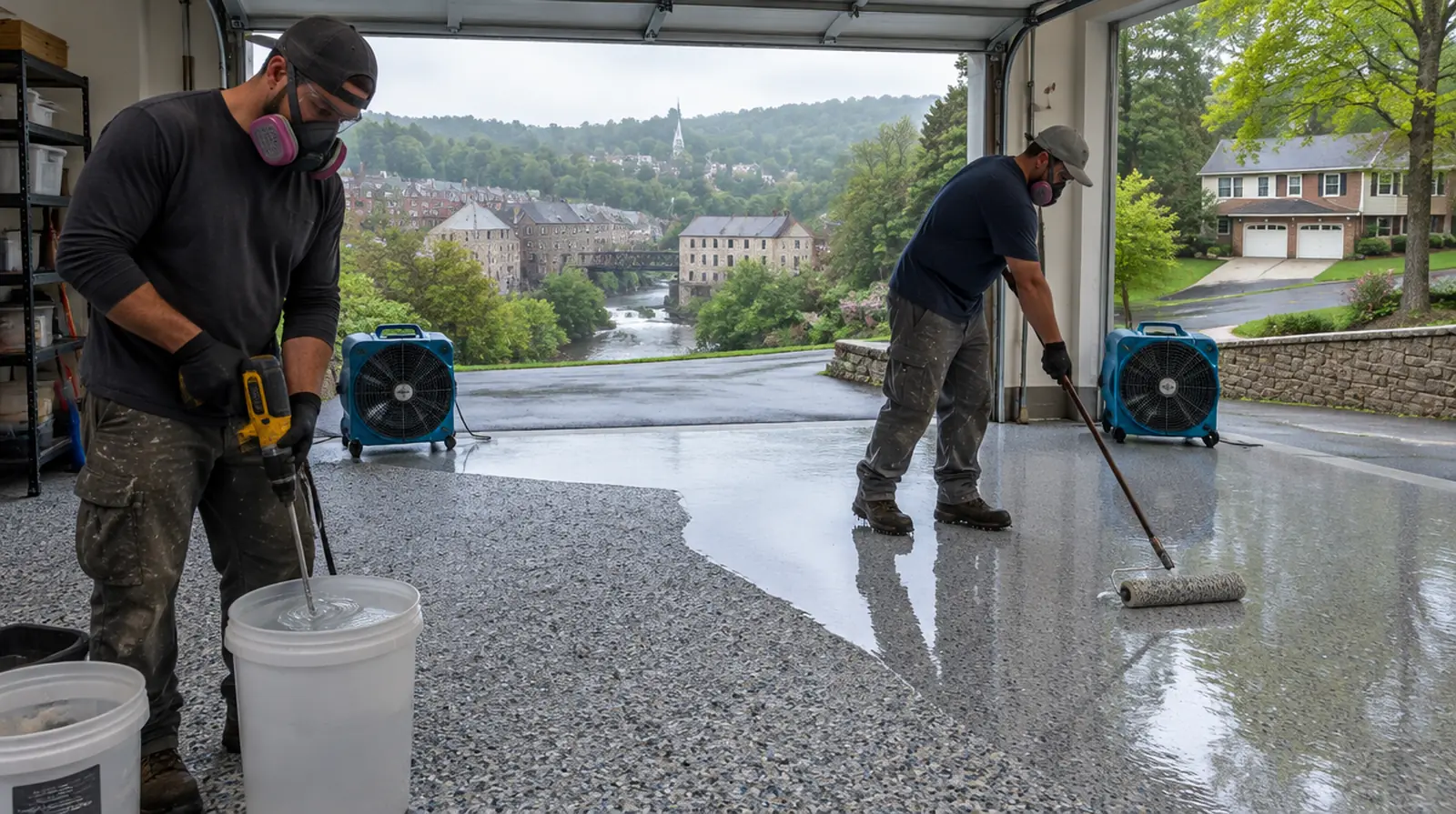
Fast cure means polyaspartic has little time to soak into concrete. We usually use an epoxy primer for penetration and bond, then build the body and topcoats with polyaspartic. On basement and below-grade slabs with higher moisture, a vapor-tolerant epoxy primer is essential.
Installation takes a practiced crew
Polyaspartic can begin to gel in the bucket within minutes. Our installers work in pairs, mix small batches and keep a wet edge so the finish has no lap lines. This is why it is rarely sold as a do-it-yourself product.
Finish options
Full flake, quartz, solid color and clear topcoats over metallic bases are all possible. Most homeowners choose flake. We tune texture with grit for steep garage thresholds and steps.
For businesses
Restaurants, clinics, retail shops and service bays use polyaspartic when closing for days is not an option. Sections can be coated overnight and opened in the morning.
Odor
There is noticeable odor during application. We ventilate the garage, seal interior doors and suggest keeping pets inside the house away from the garage. The smell fades as the coating cures.
Timeline
Grinding, repairs, primer, base and broadcast in the morning, topcoat by afternoon. Foot traffic in a few hours, vehicles in about a day in mild weather.
Cost
Polyaspartic systems usually cost more than all-epoxy floors because the materials are pricier and installation demands skill. Faster return to use and better UV stability are the payoff.
Questions
Is it really one day? Many garages are; larger repairs can add time.
Will it yellow? No.
Can it go over my old epoxy? Only if the old coating is sound and properly abraded.
Townhouse and HOA considerations
Many neighborhoods have homeowner associations with rules about work hours, parking and contractor vehicles. We schedule around those rules, keep trailers tidy and finish quickly so neighbors are not disrupted. A one-day floor is a natural fit for tight townhouse communities.
Steep thresholds and wet tires
Garages at the bottom or top of steep driveways often see rain and slush carried in on tires. We add a measured amount of fine grit to the topcoat near the door, keeping the rest of the floor easy to sweep. If water regularly pools at the threshold, we discuss a trench drain or regrading so the coating is not fighting standing water. A quick walk-through before the job helps us set texture levels that suit your car, your shoes and your pets.
Book a one-day floor
Call (443) 973-5014 for a free estimate.