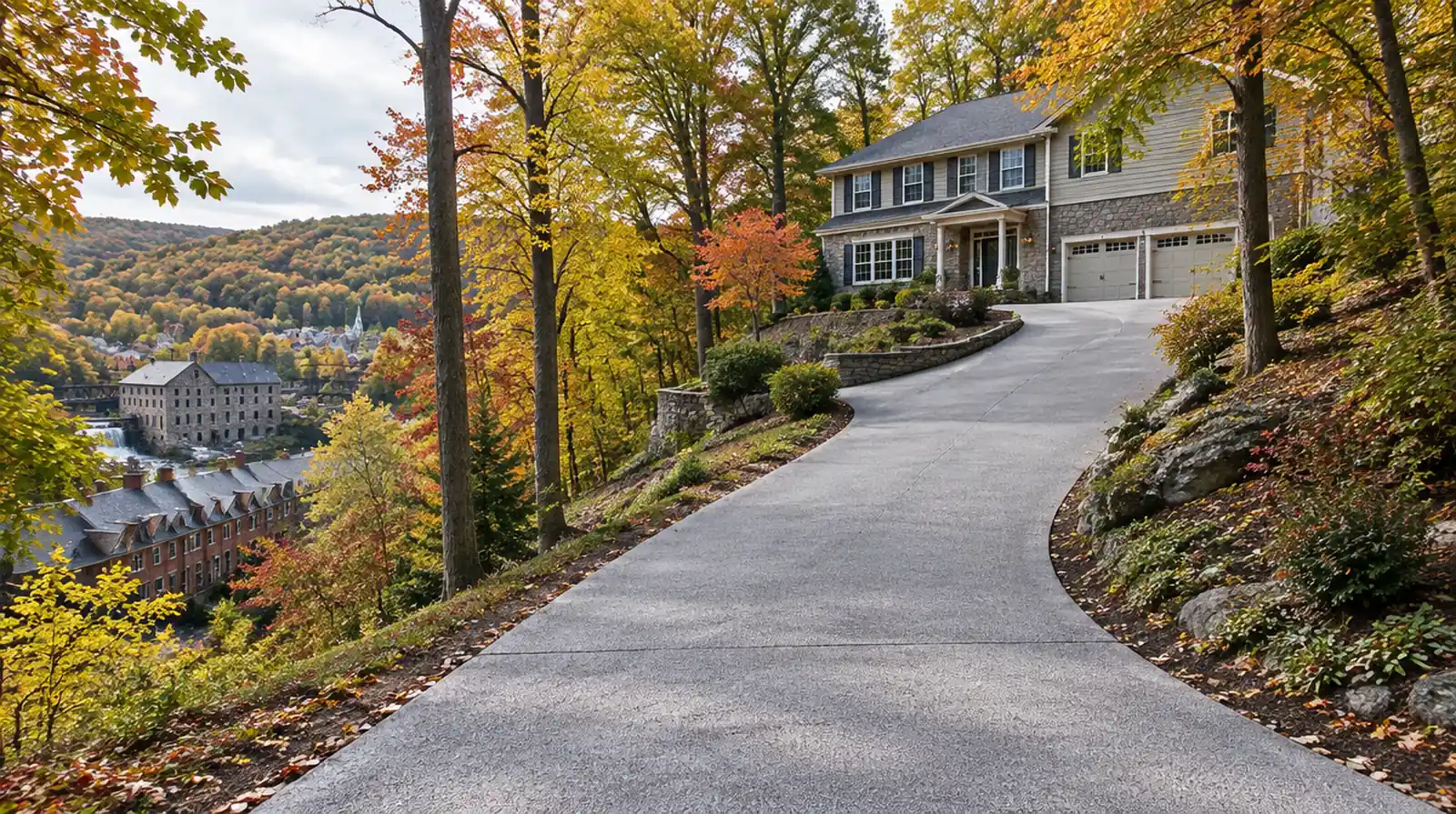
Hillside driveways take a beating
Many homes here sit up or down from the street on driveways that climb, curve and drain toward the road. Storm runoff carries grit across them. Winter brings brine and rock salt, then repeated freezing and thawing. Steep pitches mean tires spin and plows scrape. Over time the surface scales, aggregate pops loose, stains spread and patches stack up. Replacement is expensive and disruptive. Resurfacing often restores the surface at a fraction of the cost.
What resurfacing is
Resurfacing applies a thin, polymer-modified cement overlay that bonds to the existing slab. It creates a fresh, uniform surface. A broom or swirl texture adds traction for slopes. A breathable sealer finishes the job.
When a driveway qualifies
Resurfacing works when the slab underneath is structurally sound. Surface scaling, stains, pitting and hairline cracks are good candidates. Heaved sections, wide moving cracks or crumbling base need replacement first. We evaluate drainage, too: water pooling against the garage or washing out the edges must be addressed for any surface to last.
Preparation
We pressure wash, remove loose material and grind or shot-blast the surface. Cracks are cleaned and repaired. Joints are preserved so the overlay can move with the slab.
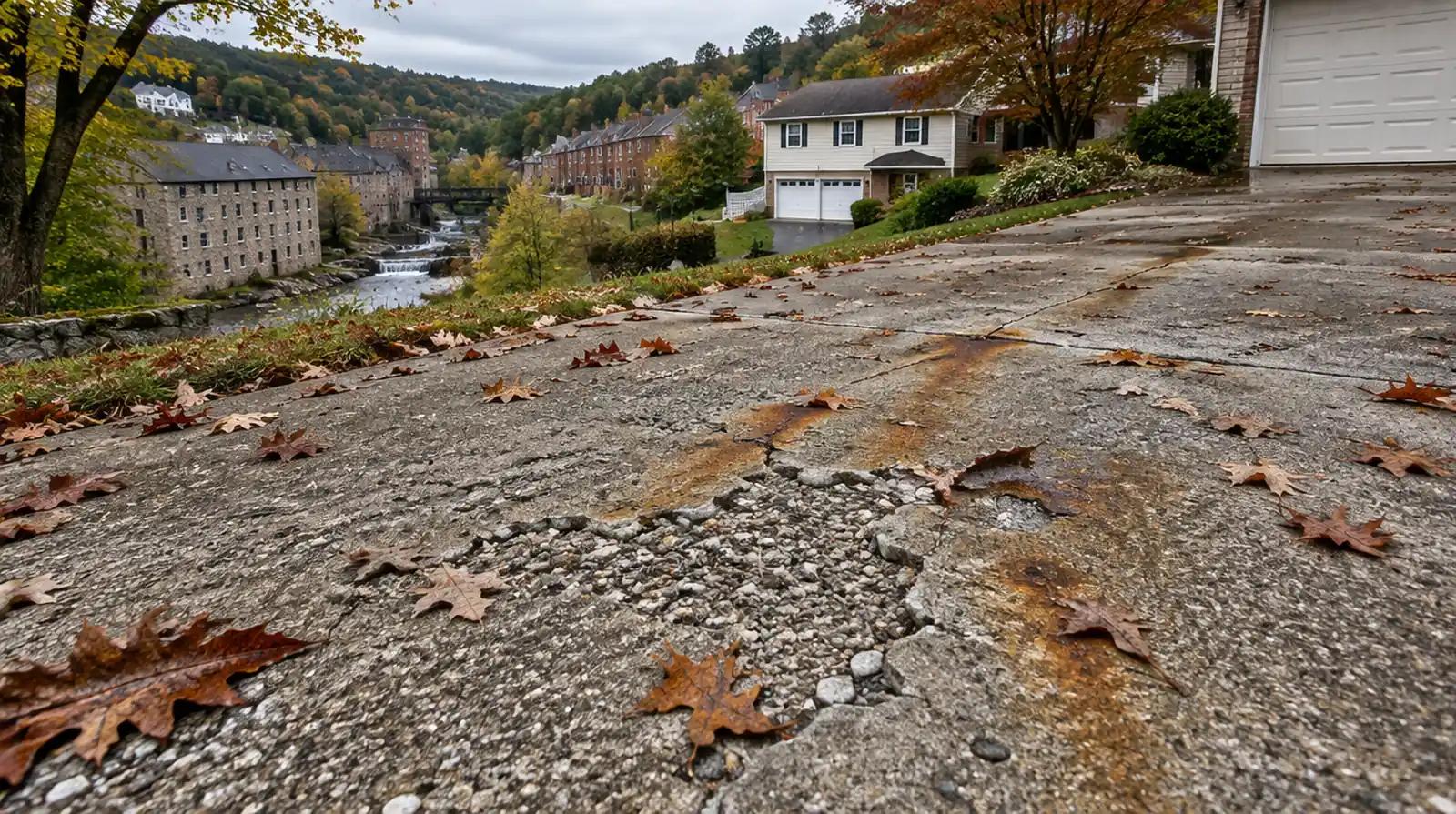
Traction on slopes
On steep driveways traction is essential. We use textured finishes and avoid slick, glossy coatings. Epoxy and polyaspartic belong in garages, not on exterior slopes exposed to ice.
Color and patterns
Overlays come in grays, tans and earth tones. Borders and scored patterns can dress up a plain drive. Integral color holds up better than painted finishes.
Timing
We resurface in mild, dry weather, typically spring through fall. Overlays need several days before vehicles drive on them, so plan parking accordingly. Steep drives may require temporary street parking.
Care
Use sand or calcium magnesium acetate instead of rock salt when possible. Plastic shovel blades and raised plow shoes reduce scraping. Reseal every few years.
Cost
Resurfacing typically costs far less than tear-out and replacement. Steep grades, extensive repairs and decorative finishes increase price.
Walkways, steps and aprons
Many homeowners resurface matching walks, steps and the garage apron at the same time so everything looks consistent.
Questions
How long does it last? Many years with sealing and sensible deicing.
Will cracks come back? Moving cracks can telegraph; we treat them with flexible repairs.
Can asphalt be resurfaced? No, this is for concrete.
Drainage before resurfacing
On a sloped lot, the driveway is often the main path water takes to the street. When storms send sheets of runoff down the pavement, they carry sand and grit that act like sandpaper, and water that slips into joints and cracks can wash out the base underneath. Before we resurface, we look at where water enters the driveway, where it pools and whether it is undermining the edges. Channel drains at the bottom of a drive, regraded shoulders and extended downspouts can all make a new surface last longer. We will tell you plainly if drainage work should come first.
Garage aprons and the plow line
The apron just outside the garage and the strip where the driveway meets the street take the worst abuse. Plows push brine-soaked slush onto the end of the drive, and the apron catches meltwater dripping off cars. Those are usually the most scaled areas. We give them extra preparation, deeper repairs and careful finishing so they blend with the rest of the surface.
Retaining walls and edges
Many drives here are bordered by stone or block retaining walls, curbs or steep banks. We protect walls and landscaping during work, tape off edges and keep overlay and sealer off stone surfaces.
Matching an old home
Historic properties and stone-front colonials often look best with warm gray or soft tan finishes that complement natural stone. We can sample colors on site so you can see them in your own light before we commit.
How long we need the driveway
Most resurfacing jobs take one to two days of work, followed by curing time. Foot traffic is usually fine the next day. Cars typically wait several days, longer in cool weather. We plan around trash pickup, deliveries and your schedule.
Get a driveway quote
Call (443) 973-5014 for a free estimate.