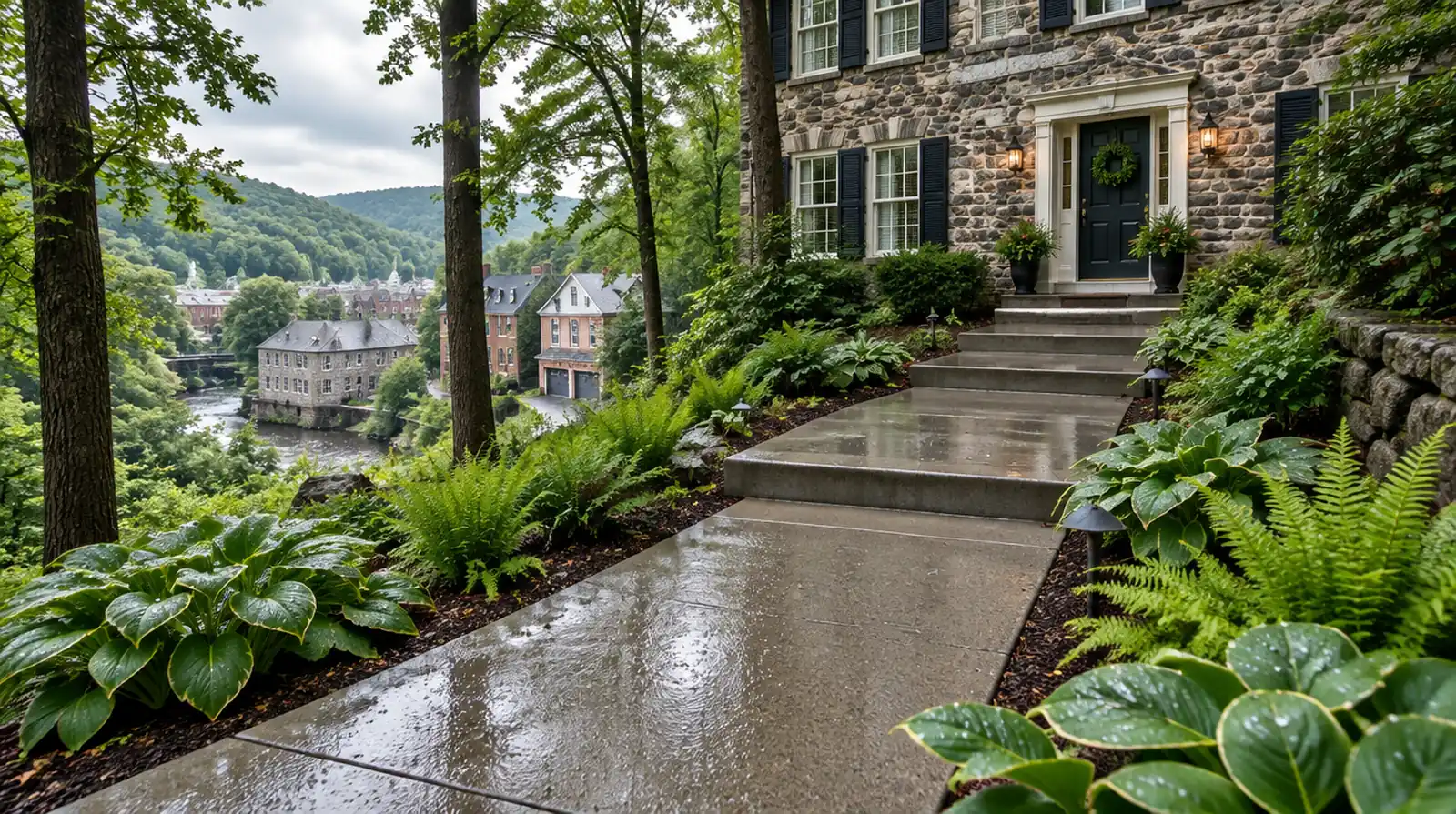
Why exterior concrete breaks down here
Concrete is porous. Rain, snowmelt and road brine soak into it. In winter that water freezes, expands and pries tiny pieces off the surface. Repeat that through dozens of freeze-thaw cycles each year and the top layer flakes away, a failure called scaling. Hillside properties add another problem: storm runoff sheets across driveways and walks, carrying grit, leaves and salt with it. A good sealer slows all of this down dramatically.
Penetrating sealers
Silane and siloxane sealers soak into the concrete and line the pores with a water-repellent layer. The surface looks almost unchanged, keeps its texture and stays slip resistant, yet water beads up and runs off. Because they work inside the concrete, these sealers do not peel. They are our standard choice for driveways, steps and sloped walks where traction matters most.
Film-forming sealers
Acrylic sealers sit on top and can add a wet look or deepen color on stamped and decorative concrete. They need renewing more often and can be slippery when wet, so we add grit on steps and pool decks.
Preparation
We pressure wash, degrease oil spots, remove moss and mildew from shaded areas and let the concrete dry. Sealing over dirt, algae or damp concrete wastes product and can trap moisture. Wooded lots often need extra attention to organic staining.
Before winter
The best time to seal is late summer through mid fall, when concrete is dry and nights are still mild. Sealing before the first salt applications gives the most protection.
Cracks and joints
Open cracks and control joints let water under slabs, which can undermine them on sloped ground. We clean and fill these with flexible sealant as part of the job.
Pool decks and patios
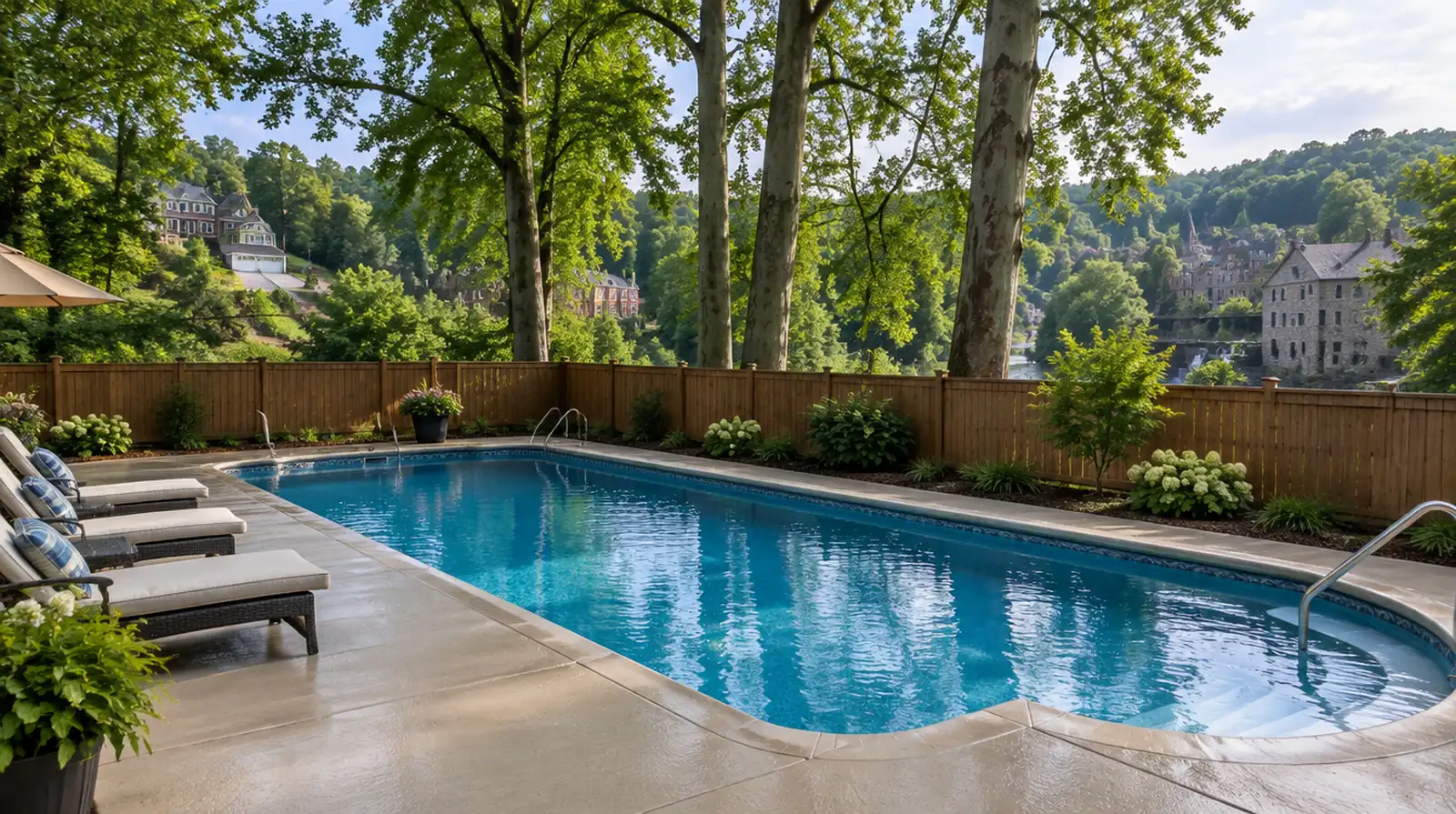
Chlorinated water and summer sun fade and wear concrete. A breathable, slip-resistant sealer protects pool decks without making them slick. Patios under trees benefit from sealers that resist mildew and tannin stains from leaves.
New concrete
Fresh driveways and patios should cure about a month before sealing. Sealing new concrete before its first winter is one of the best investments a homeowner can make.
Garage floors
A penetrating sealer reduces dusting and slows salt damage inside the garage, though it will not resist oil like a full coating.
Resealing
Penetrating sealers typically last several years; acrylics need renewal every couple of years. When water stops beading, it is time to reseal.
Questions
Will it change the color? Penetrating sealers barely do; acrylics may darken.
Can it fix scaling? No, but it slows it. Badly scaled concrete may need resurfacing.
Is it safe for plants? We protect landscaping during application.
Shaded lots, moss and mildew
Tall tulip poplars, oaks and maples shade many properties here, which keeps patios cool in July but also keeps them damp. Shaded concrete grows green algae, black mildew and moss in its pores, and those organisms hold water against the surface through winter. Before sealing a shaded patio or walk, we treat it with a cleaner that kills growth at the root, rinse thoroughly and let it dry for a full day or more. The sealer we pick for these areas contains mildewcide and is breathable, so trapped moisture can escape rather than cloud the finish.
Runoff paths and sloped walks
On hillside homes, water from downspouts and upper yards often crosses the same section of walk or driveway every storm. Those strips usually wear first, with sand washed out and edges undercut. We look at where water travels, suggest downspout extensions or small drainage tweaks where they would help, and give those strips an extra coat of penetrating sealer so they shed water as well as the rest of the slab.
Stamped and colored concrete
Decorative patios fade in sun and lose sheen as the old sealer wears. We clean, strip blotchy or peeling acrylic where needed and apply a fresh coat that brings color back. On stamped surfaces near pools we always add an anti-slip additive, since a glossy stamped finish can become slick under bare wet feet.
What a visit looks like
We walk the property with you, check for scaling and cracks, test how water beads on the surface and recommend which areas need cleaning, repair or just sealing. Most residential sealing jobs are done in a day, with foot traffic allowed in a few hours and cars the next day.
Schedule sealing
Call (443) 973-5014 for a free estimate.