The floor is the finish
Polished concrete skips the coating altogether. We grind the slab with diamond tooling, harden it with a densifier and polish it through finer and finer grits until it reflects light. Since there is no film on top, nothing can peel, delaminate or bubble. The surface wears like natural stone.
Step by step
Coarse metal-bond diamonds flatten the slab and remove coatings, glue and defects. A silicate densifier soaks in and reacts with the concrete, making it harder and less porous. Resin-bond diamonds then polish the surface to the chosen sheen. A penetrating guard can be added for stain resistance.
How much stone to show
A cream finish keeps the top paste for a smooth, even look. Salt and pepper exposes fine sand. Full aggregate grinds deeper to show larger stones. Local concrete often contains crushed stone that polishes into an attractive, varied pattern. We usually polish a small test area so you can see what your slab reveals.
Why it fits lower levels
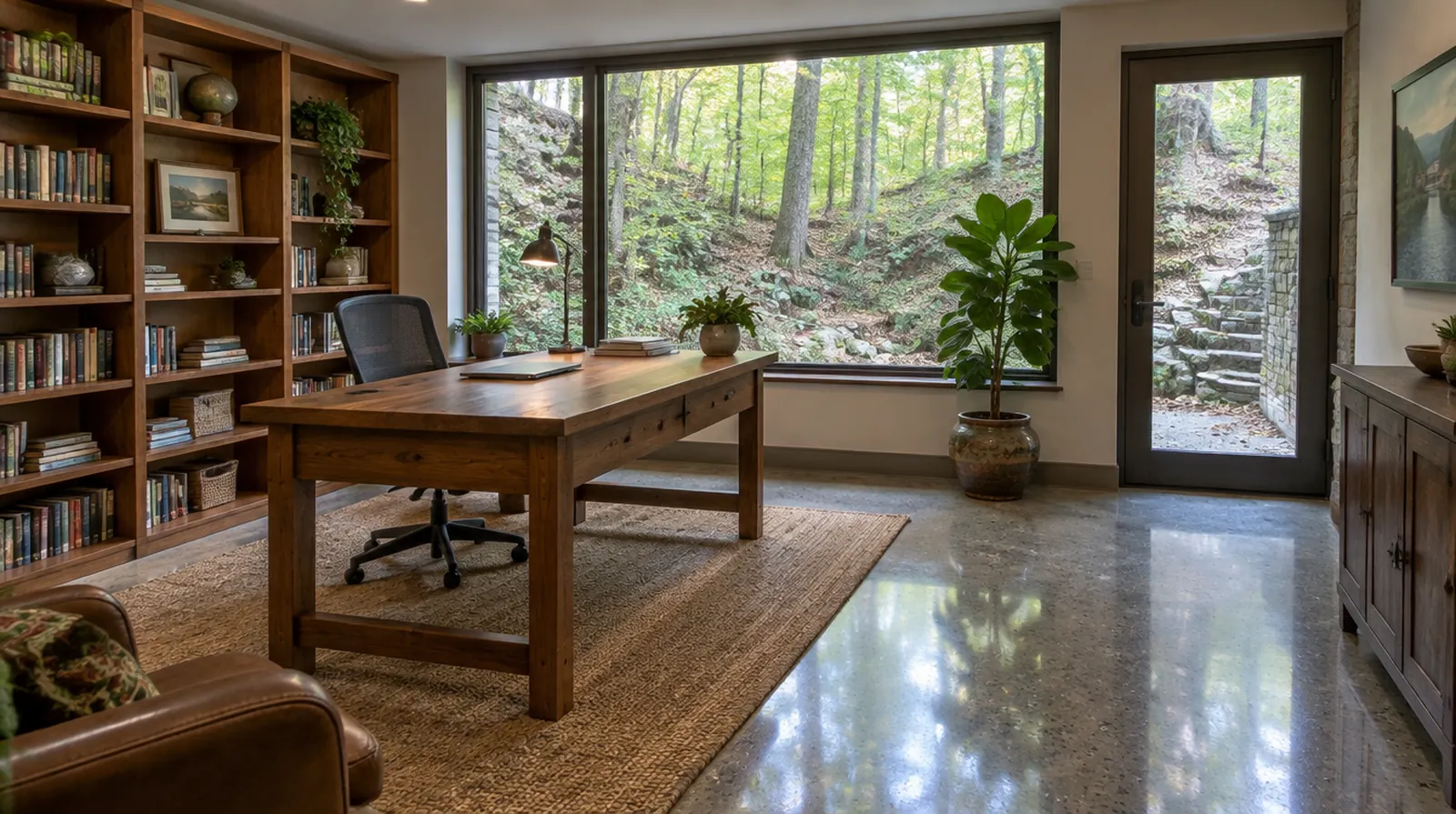
Basements on hillside lots often have moisture readings that make coatings risky. Polished concrete breathes, so vapor cannot push it off the floor. That makes it a good choice for walkout basements turned into offices, gyms and playrooms. Rugs bring warmth to seating areas.
Studios, offices and shops
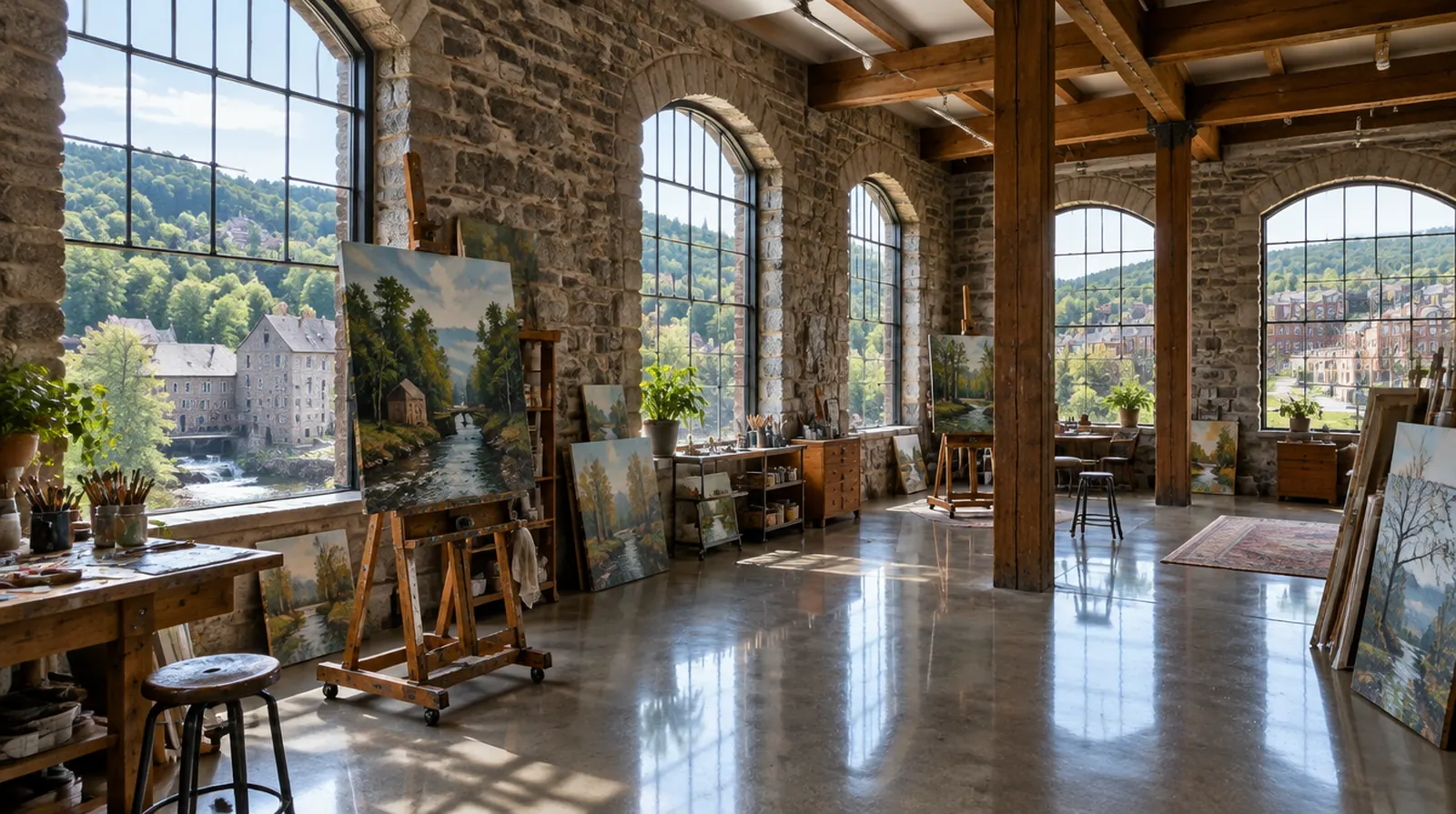
Old mill and stone buildings that now house studios, offices and shops often have slabs that polish well once old coverings are removed. Polished floors brighten interiors by reflecting light and need far less upkeep than vinyl tile or carpet.
Sheen
Satin glows softly and suits homes. Semi-gloss works for offices and shops. High gloss creates a mirror-like finish for showrooms.
Color
Penetrating dyes can warm gray concrete or create borders and patterns. Dyes are best used indoors away from direct sun.
What to expect from an older slab
Polishing reveals the slab as it is. Cracks, patches and stains remain visible, and some clients appreciate that character. If a slab is soft, heavily patched or badly stained, a coating may be the better choice.
Maintenance
Dust-mop regularly and damp-mop with a neutral cleaner. In businesses, auto scrubbing and occasional burnishing maintain shine. No waxing or stripping.
Long-term value
A densified, polished slab lasts decades with minimal care. Initial cost is similar to mid-range coatings, and maintenance costs are lower over time.
Dust control
Our grinders run with HEPA extractors, and we use plastic barriers in occupied homes and businesses.
Timeline
Basements and small offices usually take two to three days. The floor can be walked on right after polishing.
Questions
Is it cold underfoot? Concrete holds room temperature; rugs add comfort.
Can a garage be polished? Yes, though salt and oil may favor a coating.
Is it slippery? Clean, dry polished concrete has good traction.
Uncovering an old slab
Many polishing projects start with removing something: carpet and pad in a basement, vinyl tile in an office, linoleum in an old storefront. Under those coverings we often find adhesive residue, paint, patching compound and occasionally old tile mastic that needs careful handling. We identify materials before grinding and use appropriate methods to remove them, then evaluate the bare slab. Some slabs turn out beautiful; others reveal heavy patching that would look blotchy when polished. We show you what we find before committing to a finish.
Grind and seal as a budget option
If full polishing is more than a space needs, a grind-and-seal finish exposes aggregate and then applies a clear sealer. It offers much of the look at a lower cost, though it needs resealing over time.
Pairing polish with lower-level living
A polished basement floor works well with radiant floor heat, area rugs and modern furniture. It never mildews like carpet after a damp spell and cleans up easily if a sump or appliance ever leaks.
Ask about polishing
Call (443) 973-5014 for a free estimate.