Garages here deal with two seasons of trouble
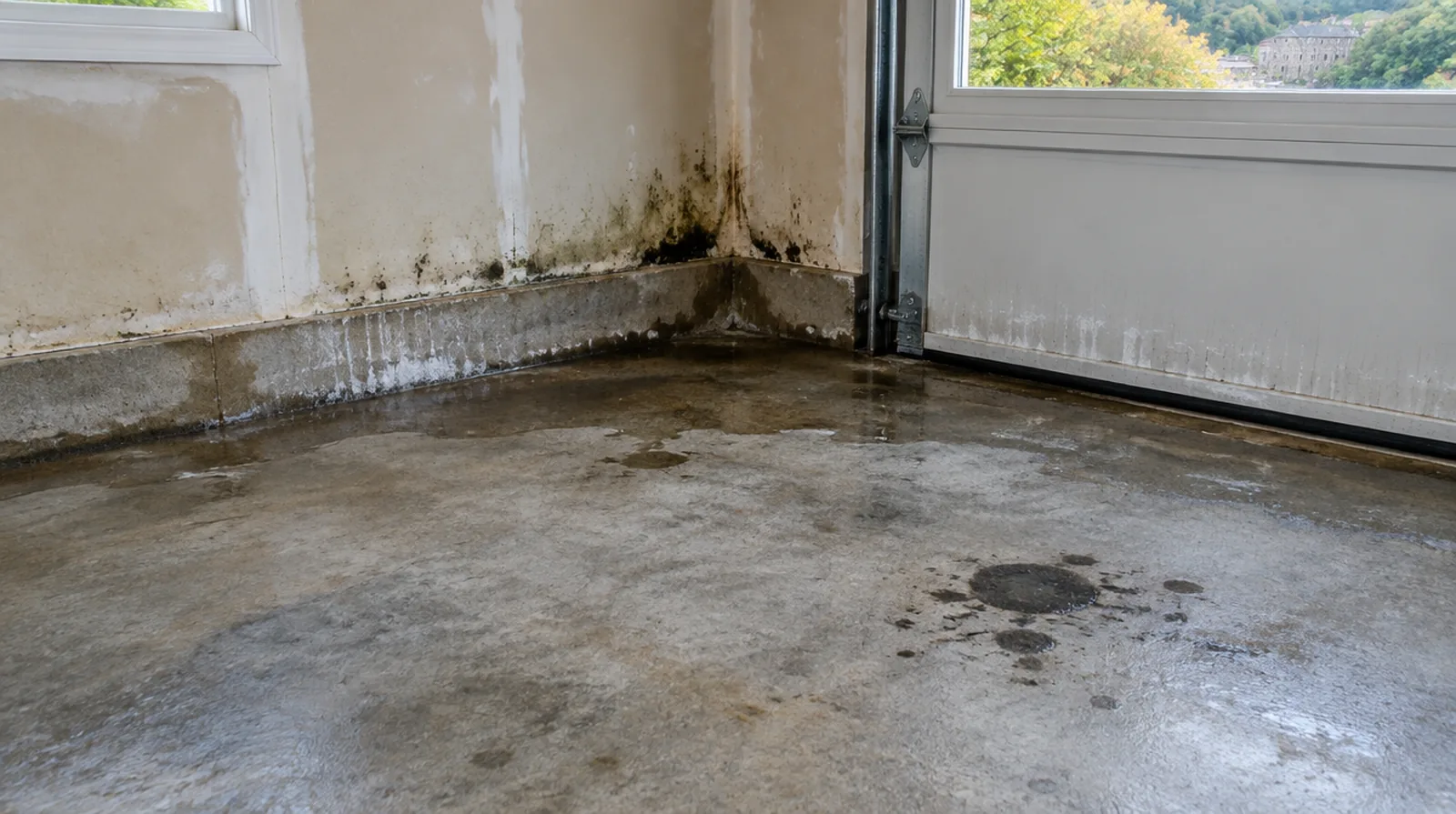
In winter it is brine. Maryland road crews spray liquid salt before nearly every freeze, and those chlorides cling to tires and wheel wells. Park a car overnight and you find a gray, gritty film around each wheel by morning. In summer it is humidity. On sticky July days, a garage slab that stays cool from the ground underneath collects condensation, so the floor turns dark and damp even though nothing spilled. Bare concrete absorbs both. Salt works into the pores and loosens the surface. Moisture feeds mildew along the walls and leaves stains under anything stored on the floor.
A bonded resin coating seals the slab against both problems. Brine and water stay on top. Wiping, squeegeeing or rinsing takes care of them. The floor stops shedding dust, and the space feels more like a room than a storage cave.
Tuck-under and front-load garages
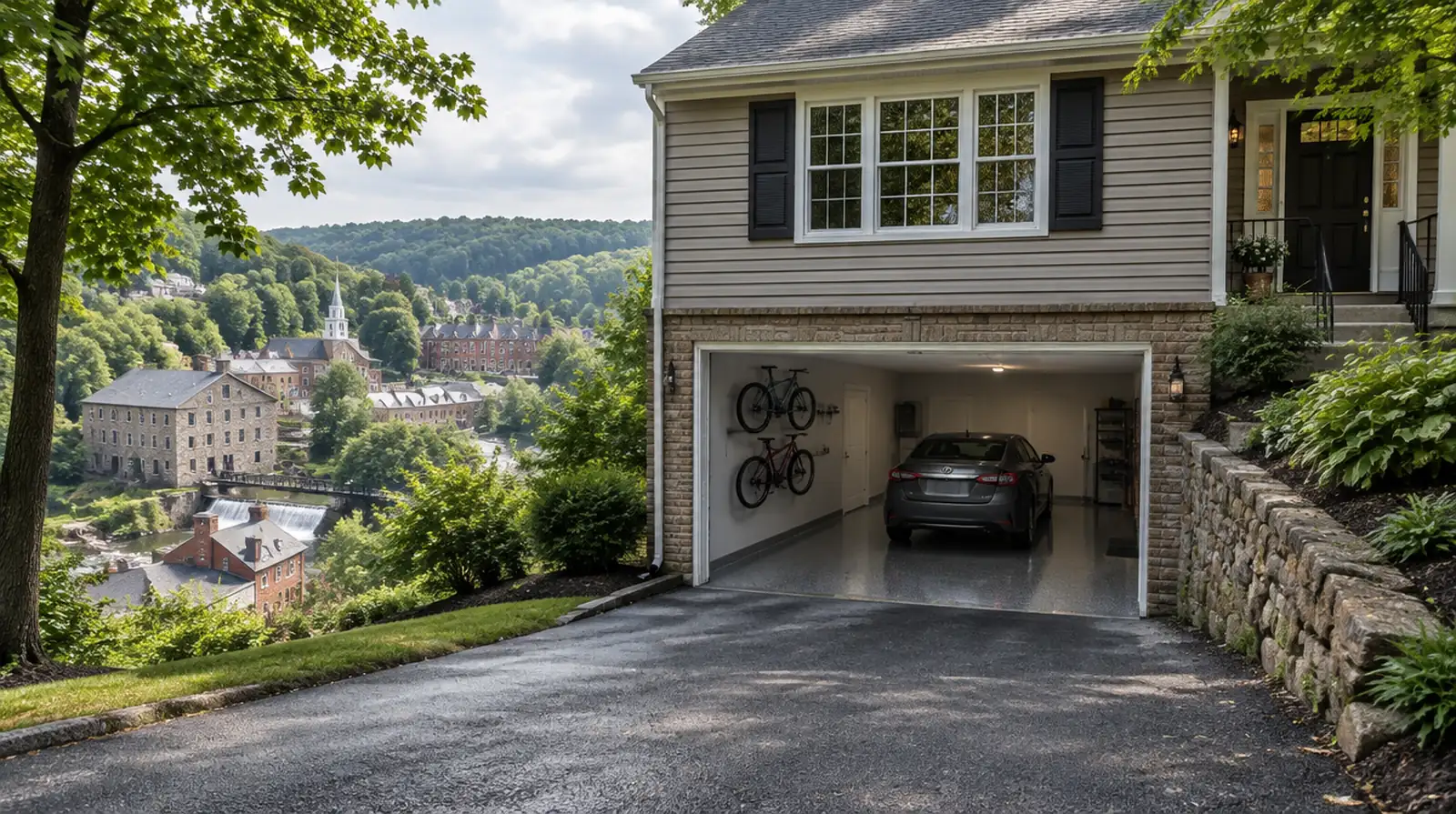
Many homes on sloped lots have a garage tucked beneath the house, with a driveway that drops steeply to the door. Rain and meltwater from that driveway can run straight inside. We pay close attention to the threshold, often building a slight lip or adding texture at the door, and we can recommend a trench drain at the bottom of the driveway if water regularly enters. Front-load garages on newer colonials are usually more level but often share a wall with a finished room, so we plan ventilation and product choice with people at home in mind.
Preparation is the whole job
A floor coating is only as good as its bond. We never acid etch. Instead, we use diamond grinders attached to HEPA dust extractors to remove the top layer of weak paste, any sealer the builder applied and stains that sit near the surface. The grinder leaves a texture like fine sandpaper that the primer grips. Cracks are opened with a crack chaser and filled with polyurea. Pitted areas get epoxy mortar. Where moisture readings are high, we use a vapor-tolerant primer.
System layers
Primer: thin epoxy that soaks into the concrete.
Body coat: pigmented resin that builds thickness and sets the color.
Broadcast: optional flake or quartz for texture and camouflage.
Topcoat: clear, UV-stable polyaspartic or urethane, with grit for traction near the door.
Hot tires and thin kits
Big-box store kits are thin, water-based and rolled over an etched slab. They look fine for a few months. Then a hot summer day and a set of warm tires pull patches loose, and the floor starts to peel. Our commercial-grade systems are much thicker and bond into ground concrete, so tires rest on a hard surface instead of lifting it.
Choosing a look
Full flake broadcast is the most popular choice for family garages because it hides salt film, leaf litter and footprints. Solid colors suit people who like a cleaner, modern look and do not mind wiping more often. Quartz offers maximum grip and wear for workshops. We bring samples to your garage so you see them in your own light.
Temperature and humidity during installation
Resin cures best in moderate temperatures with the slab warmer than the dew point. On very humid days, moisture can settle on a curing coating and cause a cloudy blush. We check slab temperature, air temperature and dew point before each coat and sometimes run a dehumidifier in the garage during the job. For cooler months, fast-curing polyaspartic systems extend the season.
Shared walls and fumes
In many homes the garage connects directly to a kitchen or mudroom, and in townhouses there may be living space above. We seal interior doors, use fans to vent outside and can choose lower-odor products. Most families stay at home during installation.
Timeline
A typical two-car garage takes two to three days with epoxy, or one to two with polyaspartic. Walk on it the next day. Park after a few days, depending on temperature.
What affects price
Size, crack and surface repair, removal of old coatings, moisture mitigation, finish type and access all play a role. Tuck-under garages with steep approaches may need extra work at the threshold. Estimates are itemized so you can see what you are paying for.
Questions
Will the coating stop condensation? It stops the slab from absorbing it, so the floor dries quickly and does not stain.
Is it slippery when wet? Not with texture and grit in the topcoat.
Can you coat over existing paint? We grind it off first.
How long will it last? Many years with proper preparation and simple care.
Get a garage floor estimate
Call (443) 973-5014 for a free estimate.